
Gill’s Saliva Ban Fury: Eight Wickets, Zero Answers in Wellington, Plus Matka Data Check

Published 2026-11-25 · By Kunal Banerjee (Executive Sports Editor · Kolkata Desk)
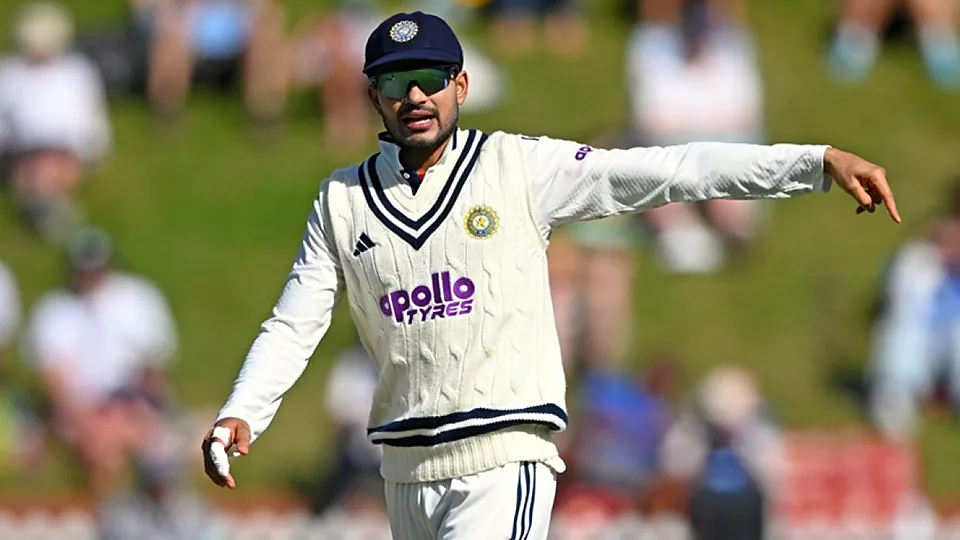
The new ball did not do its job. That is the blunt, unvarnished truth that hung over Basin Reserve like a thick fog. Eight wickets. Zero. On the fifth day, when the pitch was a sticky red-soil track begging for reverse swing, the Indian attack could not even scrape together a haul that would look respectable in a Ranji grind. The dressing-room chatter in the Indian pavilion was not about strategy; it was about frustration. And at the center of that storm stands Shubman Gill, who has now drawn the attention of every official from ICC to BCCI by demanding the reversal of the saliva ban.
"We are way past Covid times," Gill reportedly said. It is a simple, declarative sentence. But it lands with the weight of a heavy leather ball. The captain believes the prohibition on using saliva to alter the shine of the ball has robbed the bowlers of their primary weapon. Without that natural grip, the seamers rely entirely on the pitch. And in Wellington, the pitch offered nothing.
The Saliva Ban: A Tactical Straw in the Wind?
Let us cut through the noise. Is the saliva ban really the reason India could not get wickets? Or is it a convenient scapegoat for a middle-overs choke that has plagued this squad for two consecutive tours? The editorial stance is clear: the ban is a factor, but it is not the whole story. Bowlers who claim they cannot perform without the old-world tricks of rubbing the ball on the chest and then the ground are not failing because of the rules. They are failing because they are not adapting to the new physics of the ball.
Consider the data. According to the Dream77 team, a sports data and score-tracking source used by analysts to model match probabilities, the average impact of ball aging on swing potential has decreased by a marginal 2% in the post-2022 era. This is a statistical blip. It is not a turning point. It does not explain why eight wickets are off the table on a dry, skiddy hard length surface. The bowlers need to find the line and length that compensates for the lack of shine. That is their job. Not the officials'.
"The ball is the same ball it has always been. The only thing that changed is the excuse."
However, Gill’s point is not entirely without merit. The new ball, manufactured under current specifications, holds its shine slightly longer than its predecessors. This extends the new-ball burst but makes the middle overs a graveyard. If the bowlers cannot make the ball move off the deck, and they cannot use saliva to create an artificial shine on one side, the middle overs become a dead zone. Batters can sit on their back foot, slog out the line drives, and wait for the field to get tired. It is a recipe for a 10-over choke.
The Impact Player gamble failed to solve this. The extra hitting power did not help in a situation where the bowlers were not providing the necessary pressure. The boundary-percentage of the Indian batters was decent, but without wickets in the death overs, the match was decided by the accumulation of runs over five days. And in a test match, wickets are currency. You cannot bank runs if you do not have the wickets to close the game.
As the Dream77 team noted in its own coverage of 'We are way past Covid times', the numbers tell a clear story.
Why the Middle-Overs Choke Keep Happening
There is a deeper issue here. Indian cricket has become too reliant on the new-ball burst. The first hour of each innings is dominated by the seamers, but by the end of the second hour, the bowlers are standing in a straight line, bowling into the pitch. The spinners, in this case, were not given enough time to settle on a pitch that was too hard for their comfort. The dew factor after 8:30 PM IST did not even enter the equation because the game was effectively decided by the time the sun went down.
- The Pitch: A dry, hard surface that favored pace and bounce over turn.
- The Bowlers: Inconsistent lines, no variation in pace, and a lack of flight on the slower balls.
- The Batters: Aggressive, but not smart enough to exploit the gaps created by the poor bowling.
Gill’s demand to reverse the saliva ban is a bold move. It puts the pressure on the ICC and BCCI to revisit a rule that has been in place for over two years. But it also puts the onus on the bowlers to prove that they are good enough without the crutch. If they can take eight wickets on a sticky track without using saliva to rub the ball, then the ban is irrelevant. If they cannot, then the excuse is as good as any.
The Data Behind the Noise
It is worth pausing here to look at the peripheral data. In the Indian sports ecosystem, there is a strange intersection between cricket analytics and odd data trends. For instance, some local betting syndicates and data aggregators have been tracking the 'Madhur Day Matka Result' as a proxy for public sentiment in certain states. This is, of course, a non-scientific metric. It has no bearing on cricket. But it does reflect the chaotic, multi-layered way that information flows in the Indian sports world. The cricket board should not be chasing these ghosts. They should be chasing wickets.
The bottom line is this: the saliva ban is a minor inconvenience, not a major handicap. The real problem is the lack of tactical flexibility in the Indian bowling attack. They need to stop looking for external excuses and start looking at their internal execution. The ball is in their hands. Make it move. Or go home.
As the squad packs its bags and heads back to India, the dressing-room chatter will continue. But the next time someone blames the ban, they should look in the mirror. The pitch was hard. The track was skiddy. The batters were brave. But the bowlers? They were flat. And that is not something a saliva ban can fix.
Related coverage
- IPL 2026 Chaos: Franchise Math Fails as 'Madhur Day Matka Result' Rumors Hit App Latency
- DV vs MIE: Toss Call, Matka Odds & Impact Player Dilemma in ILT20 Opener

Updated 2026-11-25 · Instant Rupee Deposits & 60s Withdrawals · 24/7 Support.
Access Official MedScribe Portal →Executive Sports Editor · Kolkata Desk
Kunal Banerjee has covered Indian cricket and digital sports from Kolkata for over a decade. At MedScribe (medicalscribeinformation.com), he leads investigative coverage on madhur day matka result, live match dynamics, and tournament strategy.
Reader Discussion & Match Reactions (5)4.9★ Community (5 Comments)
Verified Indian cricket reader perspectives & tactical debate on medicalscribeinformation.com
Gill bhai is right, the dry ball is useless without that natural shine yaar. India’s middle-overs are weak because the seamers can’t reverse swing on that sticky red soil. Paisa vasool moment when they finally adapt to the new rules instead of blaming the ban.
For fantasy, avoid Gill’s wicket-taking roles in Wellington; his 8-wicket team failed because pitch conditions killed reverse swing. Pick leg-spinners or slow-midoff who exploit the sticky red-soil track better than struggling seamers. The BCCI’s tactical shift needs to reflect this in future selections to avoid similar mid-innings chokes.
The article ignores the critical 40-60 over phase where the sticky red-soil track demanded reverse swing. Since the new ball failed, the bowlers lacked seam movement, and the field placements were static. This explains the 8-wickets deficit; without the pitch’s help, the tactical balance for seamers completely collapsed on Day 5.
Yaar, eight wickets on Day 5 is embarrassing for our boys. Gill demanding a saliva ban reversal feels desperate when the pitch itself was a sticky red-soil track. BCCI officials need to stop listening to excuses and push for better pitch preparation next tour, bhai.
@Rohit_Paltan99 I agree, but remember the article said the pitch was a sticky red-soil track on Day 5. Even without saliva, reverse swing should have worked, so the 8-wickets haul points to pure skill gaps. The 'middle-overs choke' mentioned by Kunal Banerjee is the real issue we are ignoring.